


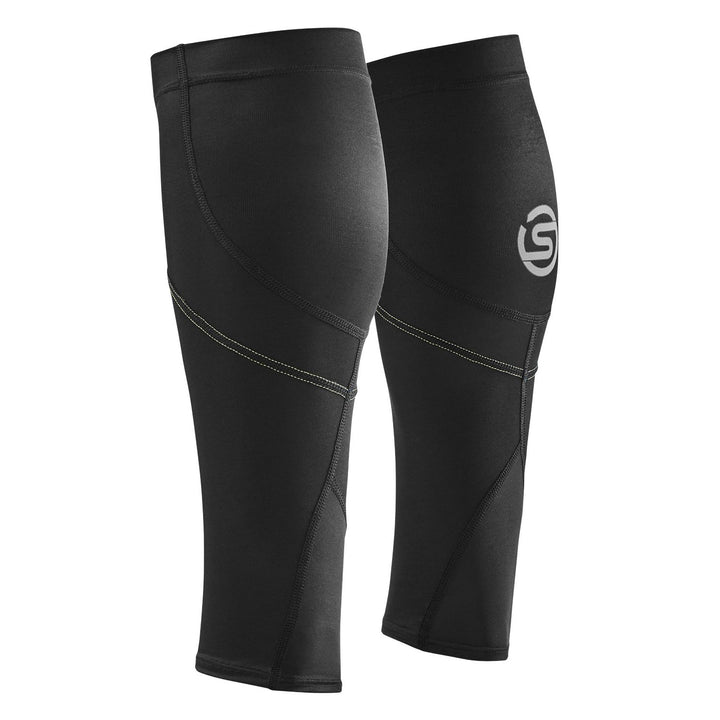


Myth #1: Sizing Down Gives You Better Compression
This is the big one. The logic seems sound — tighter must mean stronger, right?
Wrong. And it's actually working against you.
Compression is engineered, not improvised. SKINS garments are built with graduated compression zones - specific levels of pressure placed exactly where your body needs them, mapped to muscle groups and blood flow patterns. That precision only works when the garment fits the way it's designed to fit. Size down, and you're not adding benefit - you're just adding restriction. You lose the graduated effect, restrict circulation instead of supporting it, and make the garment work against your body instead of with it.
What sizing down actually does:
- Cuts circulation instead of improving it
- Overloads seams and fabric, so the garment wears out faster
- Creates pressure points instead of even, graduated support
- Can leave you sorer, not less sore
What proper sizing does:
- Delivers graduated compression exactly where it's engineered to sit
- Supports muscle oscillation and blood flow, which is what actually aids recovery and performance
- Stays comfortable enough to wear for the hours you actually need it — training, travel, or overnight recovery
- Lasts longer, because it's not being stretched beyond its design tolerance
Myth #2: Compression Only Works After Your Workout
Compression isn't just a recovery tool you reach for post-session. Graduated compression supports muscle oscillation during activity too - helping reduce muscle fatigue and improve proprioception while you're actually moving. Saving it for after the fact means you're only getting half the benefit.
The fix: wear it during training or racing for performance support, and again post-session for recovery. Two different jobs, same garment.
Myth #3: You Need To Wear It 24/7 For It To Work
More hours doesn't mean more benefit.
Compression is targeted - it's designed to support your body during specific windows: training, travel, or a defined recovery period. Sleeping in it every single night doesn't multiply the effect - it just adds unnecessary wear to the garment.
The fix: use it with intention. Match the garment to the activity, not the clock.
Myth #4: One Size Guide Fits Every Compression Product
"I know my SKINS size" doesn't always transfer from product to product. A compression tight, a recovery legging, and a travel sock are all graduated differently and sit differently on the body. Assuming your size in one product carries across the whole range is one of the easiest ways to end up in the wrong fit.
The fix: always check the specific size guide for the specific product you're buying.
- Measure, don't guess. Chest, waist, hip - whatever the garment calls for. Skip the "I'm usually a medium in everything" approach.
- Check our updated size guide. We've refreshed our size charts to make this easier - so you can match your measurements to the right fit, first time.
- Fit should feel firm, not restrictive. You should be able to move freely, breathe easily, and wear the garment for hours without numbness, pinching, or discomfort.
- Wear it with purpose. During training for performance, post-session for recovery - not around the clock out of habit.
- Different garments, different fits. Always check the specific guide for the specific product, rather than relying on memory.
Compression works because of engineering, not because of how tight you can get it on, how long you leave it on, or when you put it on. Trust the size guide, trust the science, and let the garment do what it was actually built to do.
We know Compression Sportswear can be a little daunting, so we’ve tried our best to arm you with all information you need to make an informed decision. For more, check out our FAQs.